ADHD Daily Expense Tracker for Easier Budgeting

Voxpense-Team
·4 min read
You Know Tracking Your Spending Matters, But You Just Can’t Get Started.
Coffee bought at 10:15 AM. Logging it was the plan, Until a notification got in the way.
Forty minutes later, you’re reading a news article you don’t remember opening.
The coffee never made it into your budget.
Multiply that by a week of small purchases: the auto fare, the lunch, the cab home, the snack from the vending machine. By Friday, your bank account says one thing and your budget app says another. So you stop opening the app altogether.
If this sounds familiar, the problem probably isn’t discipline. It may be executive dysfunction.
What Executive Dysfunction Does to Money Habits
Executive function is the set of mental skills that help you start tasks, hold information, switch between steps, and follow through. People with ADHD often have difficulty with these skills, but executive dysfunction can also show up with stress, burnout, anxiety, and depression.
Traditional budgeting asks for a chain of actions:
- Unlock your phone
- Find and open the budgeting app
- Navigate to “Add Expense”
- Choose a category from a list
- Type the amount
- Add a note (optional, but tempting)
- Tap save
Each step is small. Together, they form a multi-step task that depends on sustained attention and working memory. For a brain already struggling with task initiation, seven steps can feel like a wall.
The result is predictable. The expense is forgotten before the first step is complete. Hours later, the memory is gone, and so is the motivation.
Why Manual Expense Tracking Fails Most People
Manual tracking fails for reasons that have little to do with how much you care about money:
Friction at the moment of purchase. The best time to log an expense is right after you spend. That’s also the moment your attention has moved on to the next thing.
Context switching. Opening a finance app pulls you out of whatever you were doing, and returning to that task costs more mental energy than most people expect.
Category decisions. “Food & Dining” or “Groceries” or “Miscellaneous”? A small decision, but for an overloaded mind, every choice is a tiny tax.
Memory dependence. If logging happens at night, you must reconstruct the day’s purchases from memory. Most people remember the big ones and miss the small ones, which are often where money quietly leaks away.
Guilt spiral. One missed day becomes three. Three become a month. Then opening the app feels like facing a failure, so you avoid it entirely.
The Zero-Typing Approach
The fix isn’t trying harder. It’s removing steps.
A zero-typing expense tracker lets you record a purchase by speaking. Instead of unlocking, navigating, categorizing, and typing, you say what you spent and move on.
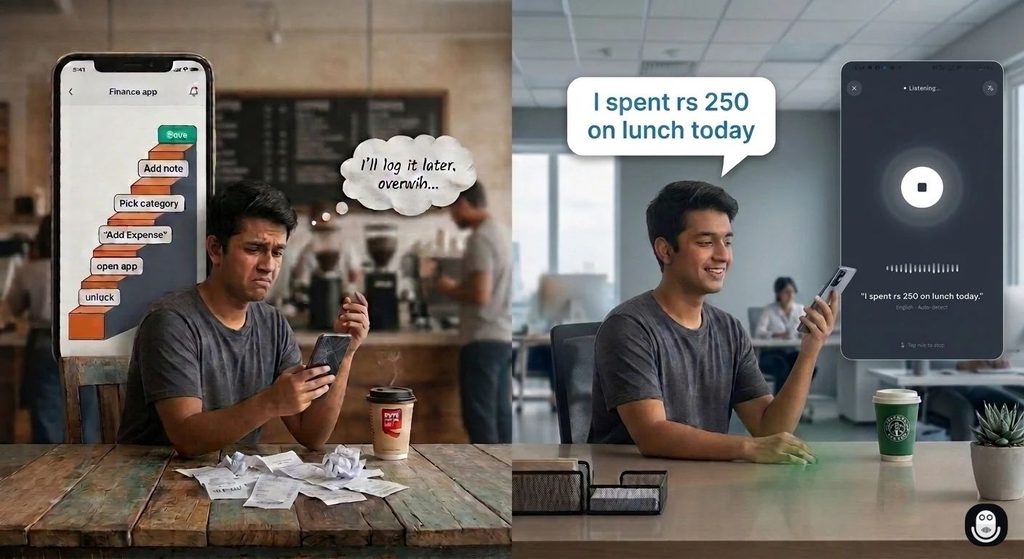
Voxpense is built around this idea. Here’s what a 3-second log looks like in practice:
- You finish paying for lunch.
- You say, “Lunch ₹250.”
- Voxpense captures the amount and assigns a category.
Because the log happens within seconds of the purchase, the mental effort stays low and the memory stays fresh. You don’t need to remember the expense tomorrow, because you already logged it today.
This is what “low friction” really means for a finance app: the logging action should be easier than the thought of skipping it.
Speaking Your Expenses in Your Own Language
Friction isn’t only about steps. It’s also about translation.
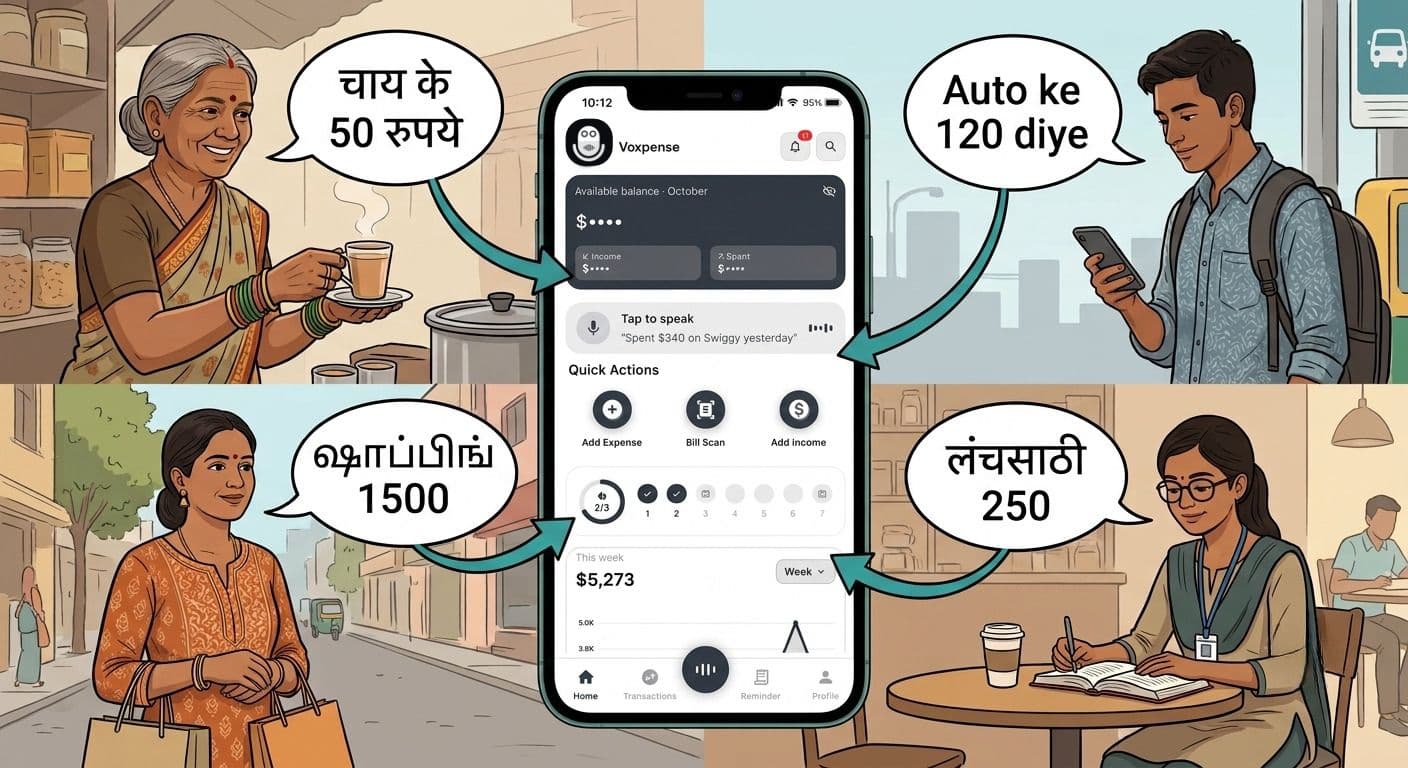
Many people think about money in Hindi, Hinglish, or another regional language. Requiring a formal English category name adds one more mental step. Voxpense supports 21 languages, so you can say, “Chai ke 50 rupees,” or “Auto ke 120 diye,” and log it as you naturally think it.
For someone with executive dysfunction, removing even one translation step can be the difference between logging and forgetting.
How to Build a Daily Logging Habit That Sticks
A zero-typing tracker works best when it’s paired with a simple routine:
Log immediately, not later. Make the voice log the last action before you put your phone away after a purchase.
Attach logging to an existing cue. Log when you pay for something, when you get home, or when you lock your phone for the night. A consistent trigger reduces the need for willpower.
Keep the bar low. Don’t aim for perfect categorization. A rough entry today is far more valuable than a detailed entry you never make.
Review once a week. Spend two minutes looking at the week’s total. You’re not auditing yourself. You’re noticing patterns.
Expect missed days. If you skip a day, don’t try to reconstruct everything at once. Log what you remember now and continue tomorrow.
What Changes When Logging Gets Easy
When tracking takes seconds instead of minutes, something shifts. You stop dreading the budget. You start noticing spending patterns: the daily coffee that adds up, the delivery orders that cluster on tired evenings, the auto rides that cost more than you planned.
Awareness doesn’t require a lecture or a strict rulebook. It requires data you’re willing to collect. A zero-typing habit builds that data quietly.
Start Small Today
You don’t need a perfect budget to begin. You need one expense logged before the moment passes.
Next time you spend money, try this:
- Pay for the item.
- Open Voxpense with a voice command, or say your expense aloud.
- Name the amount and what it was for.
- Put your phone away.
That’s the whole habit. Repeat it for a week and you’ll have a clearer picture of your money than most people ever build.
Conclusion: Make Budgeting Possible on a Tired Brain
Executive dysfunction doesn’t mean you can’t manage money. It means the usual tools ask for more steps than your brain can comfortably handle in the moment.
A zero-typing expense tracker removes the wall. Speak the expense, log it in seconds, and let the habit build from there.