Hindi Expense Tracker: Budgeting in Hindi & Hinglish

Voxpense-Team
·3 min read
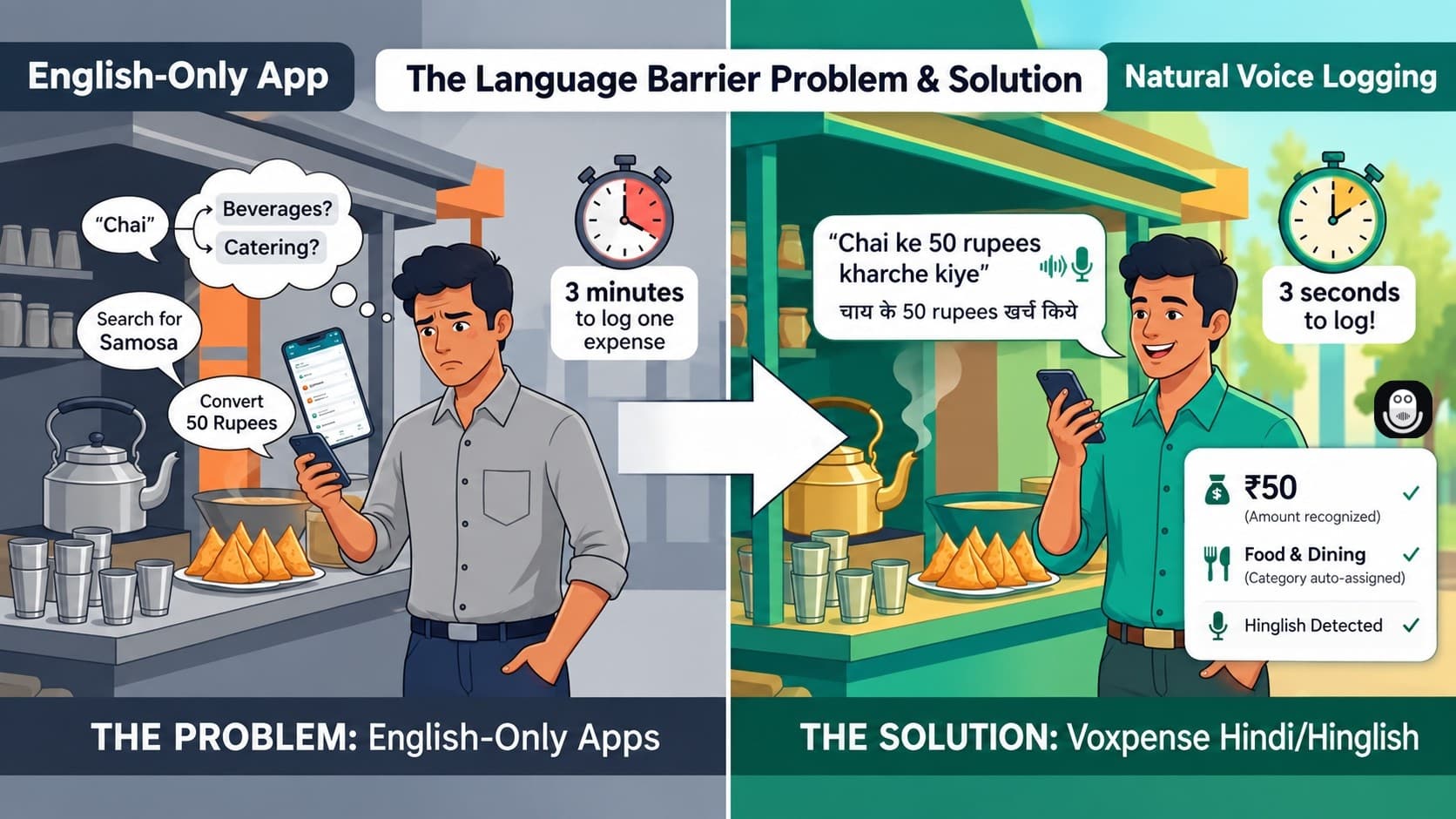
“500 Rs chai aur nashte pe kharch kiya.”
That’s a normal Tuesday morning sentence for lakhs of Indians. Not “I spent 500 rupees on tea and breakfast.” Not shuddh Hindi either. Just the natural mix of English, Hindi, and regional languages many Indians use every day.
Now open a typical budgeting app and try to log that same expense. Most require you to type “Breakfast — ₹500 — Food,” navigate multiple menus, and select a category. It works, technically. But that’s not how you naturally think about money, and this daily friction makes many budgeting apps easy to abandon.
Why English-Only Budget Apps Don’t Work for India
India isn’t a one-language market, and it was never going to be. A Hindi expense tracker using only textbook Hindi misses how people naturally mix languages. A shopkeeper’s bill, a family WhatsApp group, or a quick voice note naturally blends Hindi, English, and regional languages.
Most finance apps translate the interface for global users but don’t adapt to how people actually talk about money. The result is a tool that asks you to think in formal English before you can track a ₹50 chai. That’s an extra mental step most people skip, and skipping it means the expense never gets logged at all.
Meet Voxpense: Built for How India Actually Talks
Voxpense takes a different approach. Instead of asking you to reformat your spending into proper English sentences, it listens the way a person would. Say “500 Rs chai aur nashte pe kharch kiya” out loud, and the AI does three things almost instantly:
- Picks out the amount — ₹500
- Understands the context — chai and nashta (breakfast)
- Auto-categorizes it under Food & Dining
No dropdowns, no manual entry, no translating your thoughts before you can use the app. This is what makes Voxpense a genuine voice budget app that Indian users can stick with, because it removes the one habit-killing step that most trackers never solve: the gap between how you think and how the app expects you to type.
From Hindi to Hinglish to 20 More Languages
Voxpense supports voice input in English, Hindi, and 19 more languages, including Marathi, Tamil, Telugu, Kannada, Gujarati, and Punjabi. That alone makes it one of the more complete options if you specifically want to track expenses in Hindi without fighting an English-first interface.
But the more useful part, for most Indian users, is the Hinglish handling. You don’t have to pick a language and stay locked into it. You can say “kal Swiggy pe order kiya tha, 340 rupees” in one breath, switch to full English for the next entry, and mix in a regional word here and there — the AI keeps up with all of it. That’s what genuinely qualifies Voxpense as a Hinglish finance app, not just an app with a language selector bolted on.
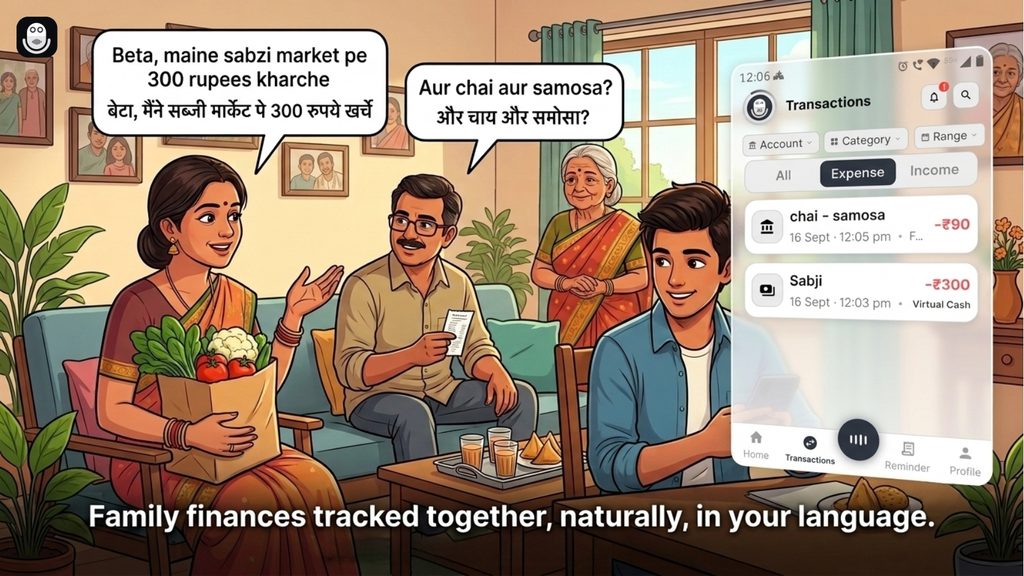
For families and households where different members are more comfortable in different languages — a parent who prefers Hindi, a sibling who defaults to English, a grandparent who speaks Tamil — a single regional language budget app that adapts to each speaker, rather than forcing everyone into one language, ends up being the version that the whole household actually uses.
Why This Matters for Budgeting Accuracy
Every finance app can only report on the data it captures. A budgeting tool becomes accurate not because its charts are pretty, but because logging an expense takes five seconds and zero mental translation. When the friction of “how do I even phrase this” disappears, people log more consistently — the coffee, the auto fare, the quick grocery run — instead of only remembering the big-ticket spends at the end of the month.
That consistency is what turns a budgeting app from a once-a-month guilt exercise into an actual daily habit. And once daily voice logging in your own language becomes routine, the reports, category breakdowns, and budget alerts built on top of that data start meaning something, because they’re built on real, complete spending — not a partial picture typed in whatever language felt easiest to type quickly.
Getting Started
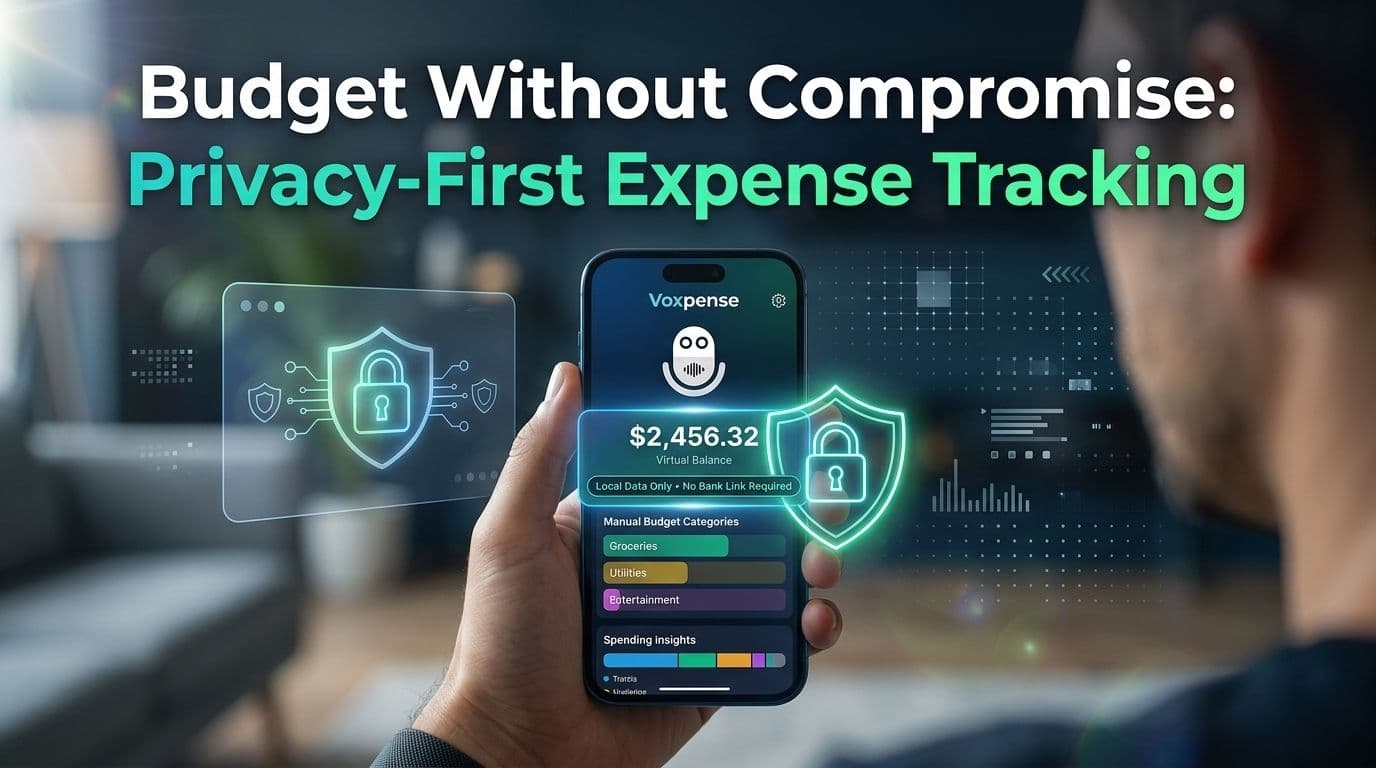
Voxpense is free to download, with no bank account connection required and no card details needed to start. Voice logging in English and Hindi is available on the free plan, with all 21 languages —including Hinglish handling across the board —unlocked on Pro, currently free for early users.
If budgeting apps have never quite stuck for you, it may not be a discipline problem. It might simply be that no app so far has understood the way you actually talk about your money. Speak your next expense the way you’d say it to a friend, and see what Voxpense makes of it.