ADHD Subscription Tracker: Manage Renewals Without Stress

Voxpense-Team
·4 min read
The Charge You Didn’t See Coming
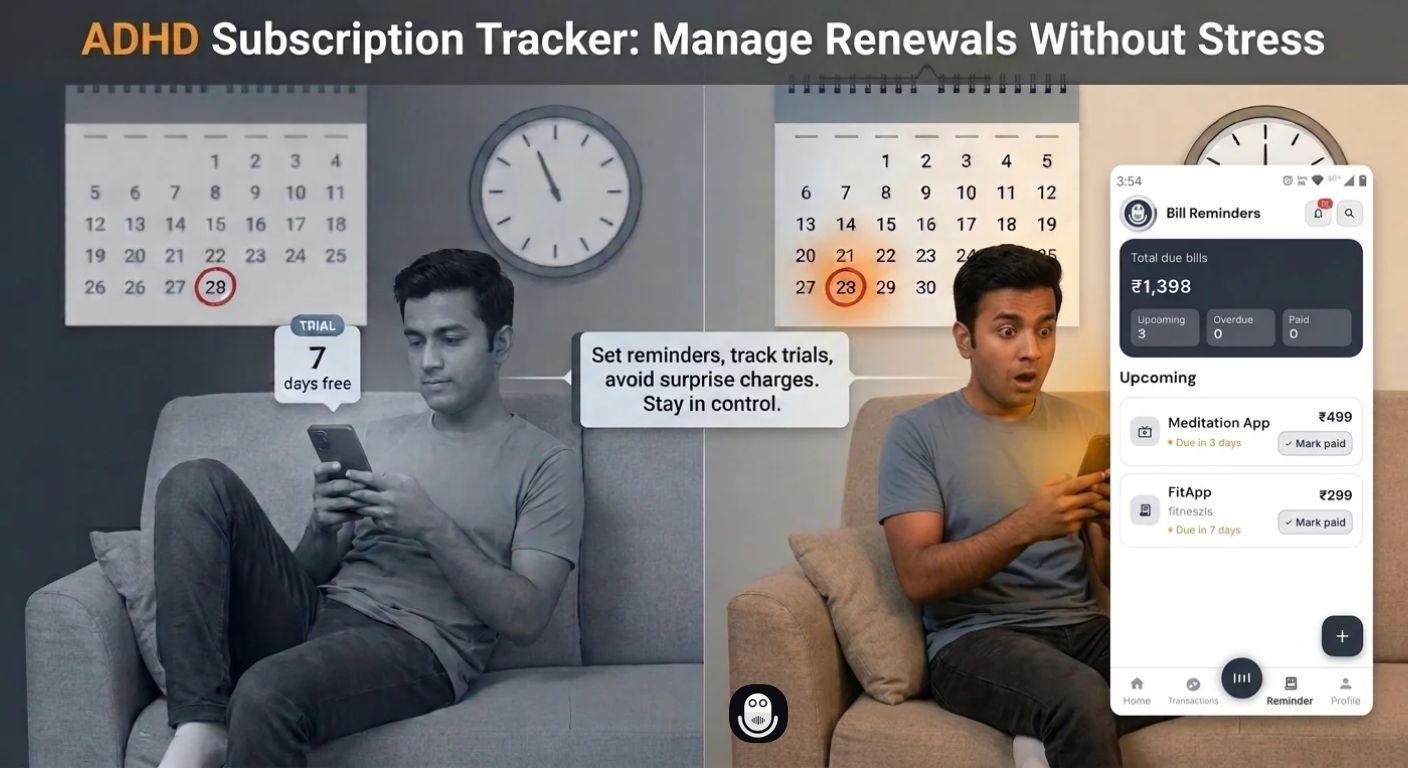
You signed up for a seven-day free trial of a meditation app, fully intending to cancel it.
Then the week got busy, and the trial quietly became a paid subscription. A month later, the charge appeared on your bank statement. Then another. By the time you noticed, the app had taken money three times, and you couldn’t remember when the trial had started.
It wasn’t carelessness, exactly. Time had simply slipped past without feeling like it had passed at all.
If you regularly lose track of dates, especially when it comes to bills and renewals, you may be experiencing something called time blindness.
What Time Blindness Means
Time blindness is a term often used in ADHD discussions to describe difficulty sensing how much time has passed or how much remains. It isn’t a formal diagnosis on its own. It’s a practical way of describing a common experience: a deadline that feels far away until suddenly it’s today.
People who experience time blindness often find that:
- A week feels like three days, or a month feels like a single afternoon
- Deadlines are invisible until they’re urgent
- “I’ll deal with it later” quietly becomes “it’s already too late”
- Future obligations, like rent, renewals, or annual plans, don’t register until they arrive
For money, this creates a specific problem. Recurring payments are designed to happen in the background. If your sense of time is unreliable, you’re left managing a schedule you can’t feel.
Why Free Trials and Renewals Are So Easy to Miss
Subscriptions are built around a gap between the moment you agree and the moment you pay. A free trial promises a future cost but delivers no immediate signal. The first charge often arrives weeks later, long after the decision felt settled.
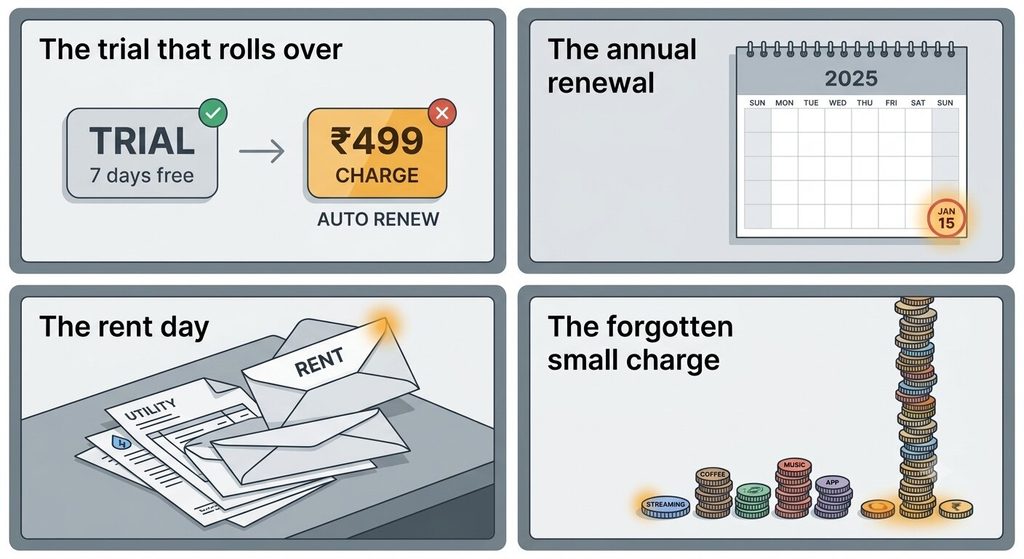
Common patterns include:
The trial that rolls over. You planned to cancel “before the trial ends,” but you never set a date.
The annual renewal. A yearly charge can feel more distant than a monthly one, even when the amount is larger.
The rent you pay on a specific day. Even predictable bills can slip when your attention is elsewhere, especially if the due date falls during a busy week.
The forgotten small charge. A low monthly fee is easy to ignore until several of them stack up.
Each of these depends on the same thing: a future date that doesn’t feel real until it arrives.
Memory Can’t Carry the Whole Load So ADHD Subscription Tracker Can!
Most people try to solve this with memory. They make a mental note, promise themselves they’ll check, or tell themselves they’ll remember when the bill is due.
For someone with time blindness, that mental note often disappears under the next task. The date isn’t forgotten because the person is careless. It’s forgotten because the brain never gave it enough weight to hold onto.
What helps more is an external memory: something that keeps the dates visible and reminds you before they matter.
Voxpense as an External Memory for Bills
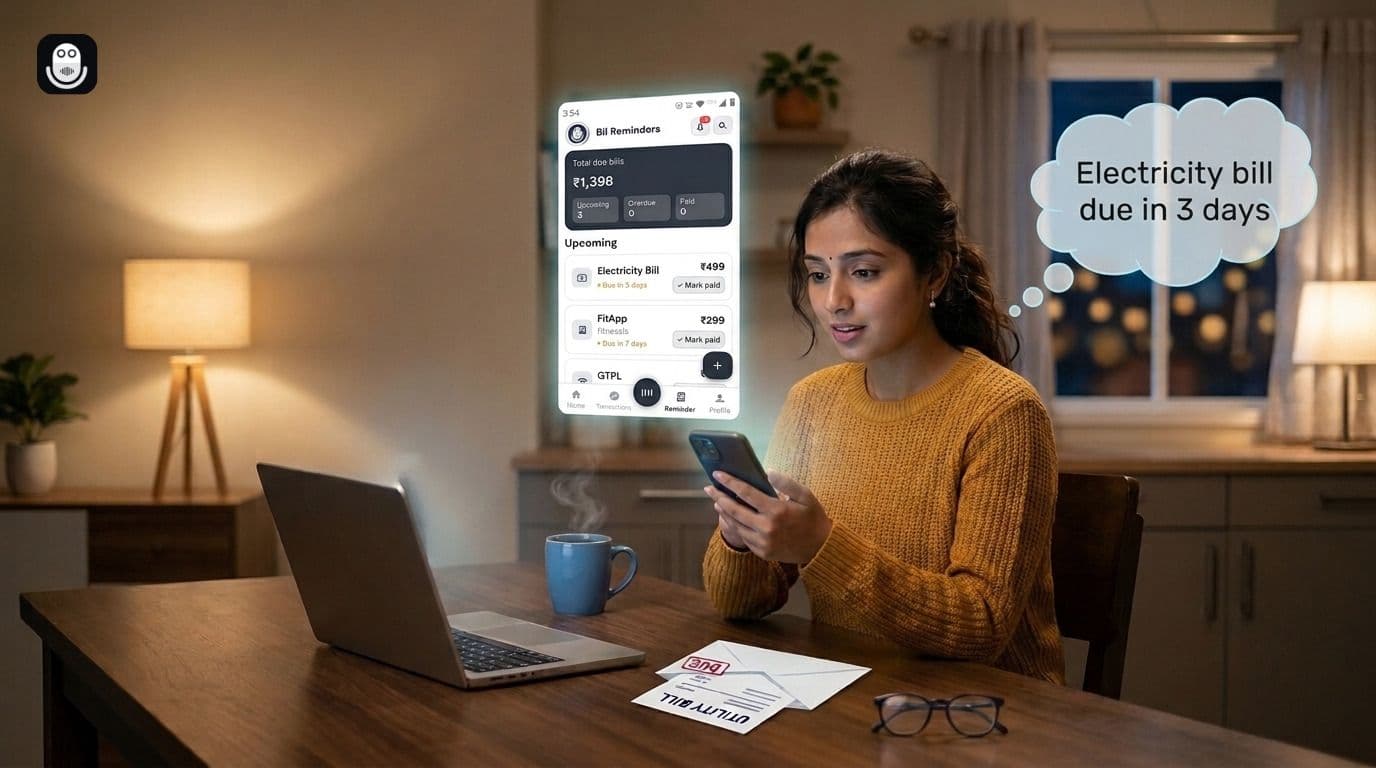
Voxpense works best when it becomes the place where your upcoming money lives. Instead of relying on your sense of time, you can use the app to keep it visible.
A visual bill timeline. Your recurring payments can appear on a timeline so you can see what’s coming in the next week, the next month, or the next quarter. A date that once felt abstract becomes a concrete marker on a screen you already check.
Advance reminders. Reminders can arrive before a charge, not just on the day it happens. That gap gives you room to decide whether to keep the subscription, cancel it, or move money into place for rent.
Loud, noticeable alerts. For people who easily tune out notifications, reminders that stand out matter. A quiet badge may not be enough. Alerts that are clear and hard to dismiss can interrupt the drift of time.
Together, these features act as a digital external brain. You don’t have to hold every date in your head. You only have to notice the reminder when it appears.
A Simple Setup for Your Recurring Bills
Start with the bills that cause the most stress. You don’t need to enter everything at once.
- List your recurring payments. Include subscriptions, rent, utilities, insurance, and any annual renewals you can remember.
- Add each one to Voxpense – ADHD subscription tracker with its amount and the date it charges.
- Turn on advance reminders. Choose a lead time that gives you enough room to act, such as a few days before a charge.
- Check the timeline once a week. Two minutes is enough to catch anything coming up.
- Decide on trials as soon as you start them. When you sign up, add the trial end date to Voxpense immediately, along with a note about whether you plan to keep it.
This setup doesn’t require perfect discipline. It requires one habit: letting the app remember dates so you don’t have to.
What Changes When Dates Are Visible in the ADHD Subscription Tracker
When renewals appear on a timeline, a few things tend to shift:
- Surprises shrink. You know what’s coming before it hits your account.
- Decisions get easier. A reminder three days before a trial ends is far more useful than a charge you discover a month later.
- Anxiety drops. Uncertainty about what might be drafted is often more stressful than the bills themselves.
The goal isn’t to become someone who tracks every day obsessively. It’s to build a system where the important dates come to you.
Conclusion: Let the Calendar Keep Time for You
Time blindness doesn’t mean you can’t manage money. It means your internal sense of time is unreliable, and your financial tools should account for that.
A visual bill timeline and advance reminders can carry the load your memory can’t. Add your recurring payments once, see what’s coming, and act before the date arrives.
Download Voxpense now!