Impulse Buying App to Stop Impulse Spending

Voxpense-Team
·4 min read
The Cart Was Full Before You Noticed
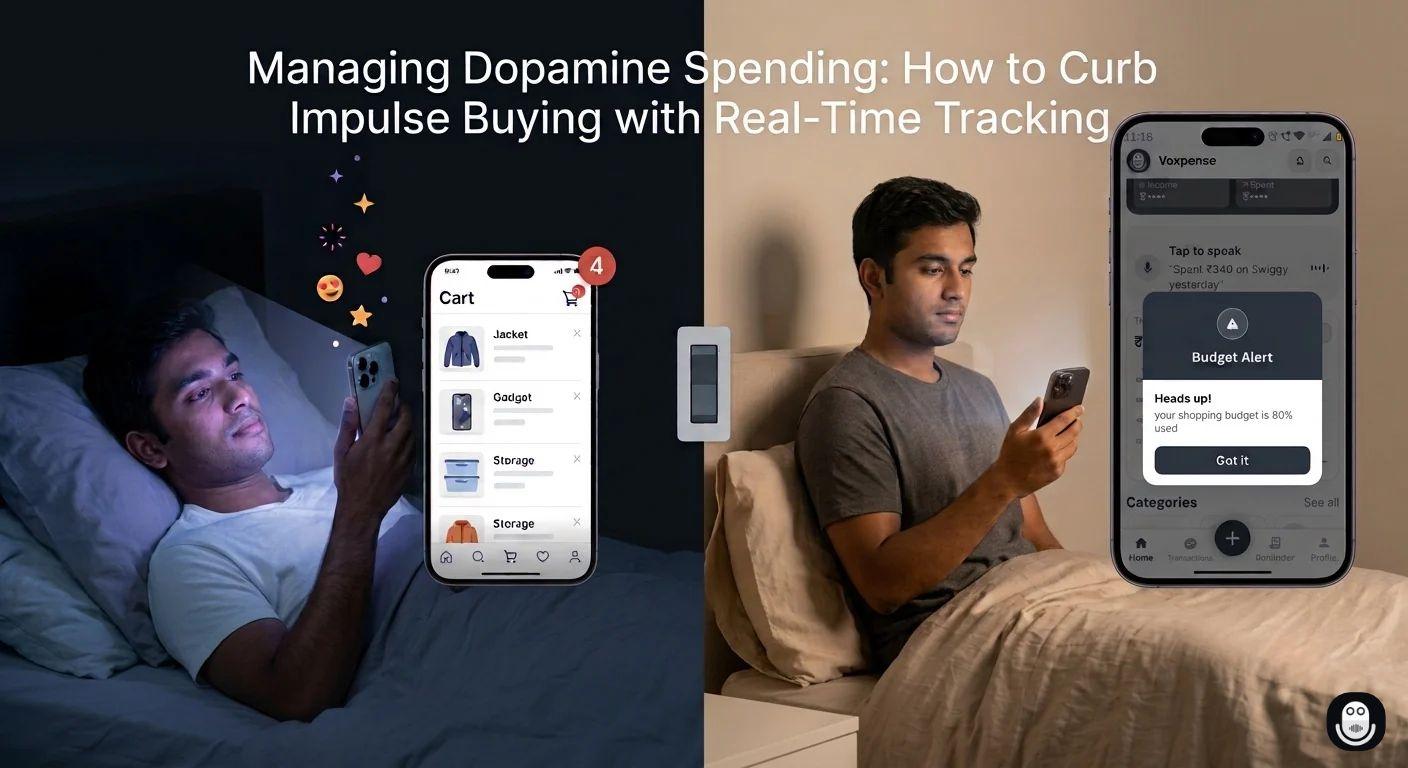
It’s 11:40 PM. You opened the app to check the weather and somehow ended up in an online store. A jacket you don’t need is in the cart. Then a gadget. Then a set of storage containers you’ve never once thought about until now.
Ten minutes later, you tap “Buy Now.” The confirmation feels good. Almost too good.
By the end of the month, those small rewards have added up to a budget that doesn’t match your plans. You didn’t decide to overspend. It just happened, one moment at a time.
If this pattern feels familiar, it’s worth understanding what is driving it.
What Dopamine Actually Does in Spending in Impulse buying app
Dopamine is often described as the “pleasure chemical,” but that’s a simplification. Dopamine is more closely linked to motivation, anticipation, and the brain’s sense that something rewarding might be coming. It helps us notice opportunities and move toward them.
Shopping exploits this system. A product page offers a promise: a new look, a better routine, a small upgrade to life. The anticipation can feel more intense than the purchase itself. Then the delivery arrives, the excitement fades, and the brain begins looking for the next promise.
For people with ADHD, this cycle can be stronger. ADHD is associated with differences in how the brain responds to reward and delay. Waiting feels costly, and immediate, novel rewards feel especially appealing. Online shopping, with its instant checkout and endless new items, is designed for exactly that kind of reward pattern.
This isn’t a character flaw. It’s a mismatch between a brain that wants relief now and a shopping environment built to deliver it in one tap.
Why Willpower Alone Rarely Works Impulse buying app?
Most advice on impulse buying sounds like this: “Just don’t shop when you’re bored.” It’s sensible, but it asks you to resist a feeling in the exact moment that feeling is strongest.
The problem is timing. Impulse purchases happen fast, often within minutes of the urge appearing. By the time you’ve decided to think about it, the checkout button has already been pressed.
What helps is not more willpower but a pause that’s built into the process. A small delay, a moment of attention, a question that interrupts the automatic path to “buy.”
Voice Logging as a Circuit Breaker on impulse buying app
A circuit breaker in your home cuts power before a wire overheats. A spending circuit breaker works the same way: it interrupts an automatic process before it causes damage.
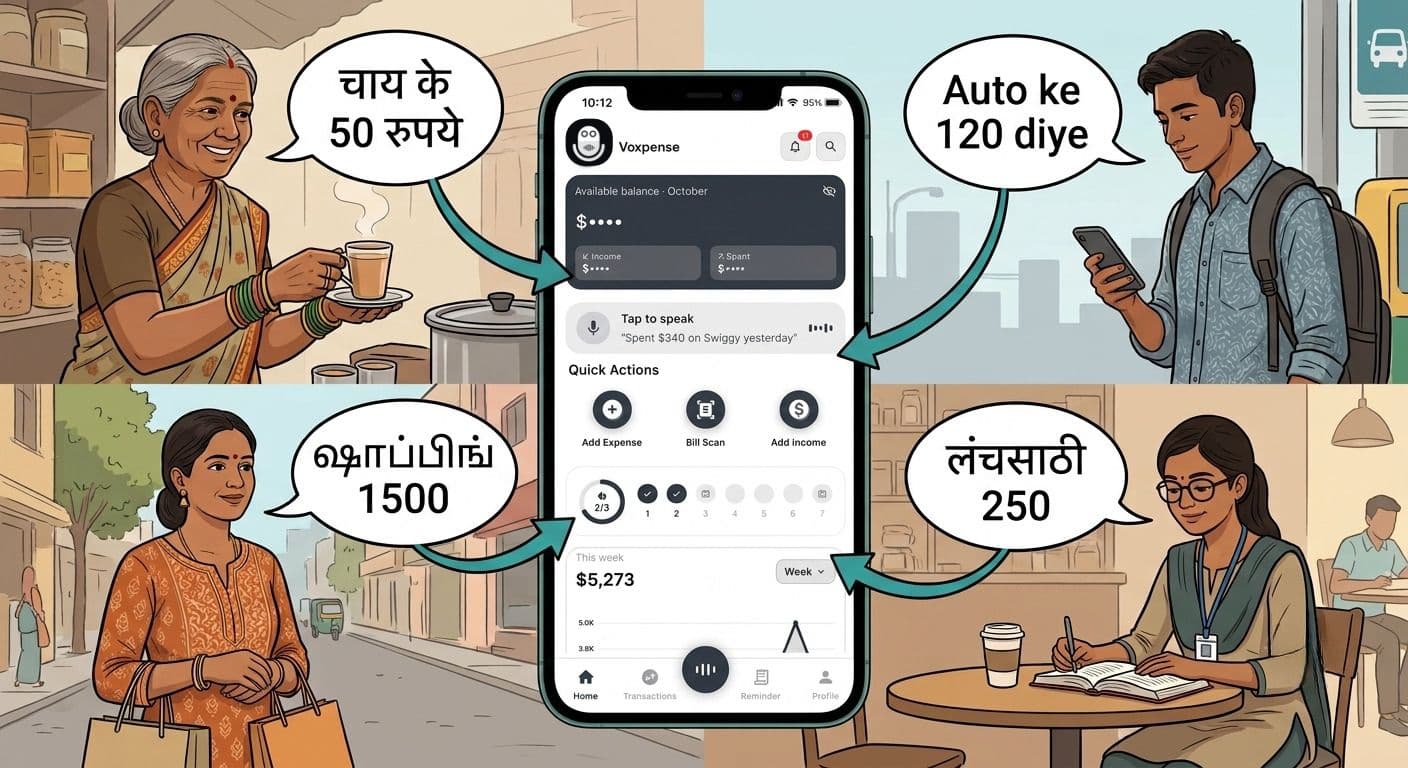
Voxpense can serve this role. Instead of letting the purchase slip by unnoticed, you speak it out loud before you buy. For example:
- You’re about to order a pair of shoes.
- You say, “Shoes, 2,400 rupees, online.”
- Voxpense records the amount and category.
That short act of speaking does two things. First, it forces you to name the purchase, which is harder to do when a thought is vague and easy to rationalize. “Something for the weekend” becomes “shoes, 2,400.” Second, it creates a few seconds of separation between the urge and the transaction.
Those few seconds are often enough to ask simple questions:
- Do I already own something similar?
- Will I still want this tomorrow?
- What else was this money meant for?
You don’t have to answer them perfectly. The goal is simply to make the decision visible.
Real-Time Budget Alerts Make the Cost Visible
Speaking a purchase is only part of the circuit breaker. The second part is seeing what it does to your plan.
Real-time budget alerts show how a new expense affects your monthly limit, category budget, or savings goal, right when you’re making the decision. Seeing “₹2,400 spent, ₹1,100 left in Shopping this month” changes the emotional math. An abstract “I deserve this” becomes a concrete trade-off.
This matters because impulse spending often hides in plain sight. Each purchase feels small. Alerts make the running total impossible to ignore.
Practical Steps to Interrupt Impulse Buying
You can start using this approach today with a few simple habits:
Speak before you tap. Make your first move a voice log, even if you haven’t decided to buy yet. Logging “considering: headphones, 3,000” is a valid entry.
Set a personal waiting rule. For non-essential purchases above a set amount, wait 24 hours. Use the waiting period to check whether the item still appeals to you.
Keep your budget visible. Glance at your category totals once a day. Visible limits make the next decision easier.
Name the trigger. Notice what came before the urge: boredom, a stressful meeting, a late-night scroll. Patterns become easier to spot when you log them consistently.
Don’t punish yourself for slips. A missed pause is not a failure. Log the purchase honestly and keep the habit going.
Why Honest Tracking Matters More Than Perfect Control
The aim is not to eliminate every impulse. Some purchases are worth making spontaneously, and a budget that feels like a prison usually gets abandoned.
The aim is awareness. When you know what you’re spending and when, you can choose more often. Over time, the gap between the urge and the decision gets wider, and the spending that bothered you most becomes easier to redirect.
Conclusion: Create a Pause Before the Purchase
Dopamine driven spending is powerful because it moves faster than deliberate thought. A circuit breaker works by slowing that movement down.
Speak the purchase, see the impact, and give yourself a moment to choose. You may still buy the jacket. But you’ll know exactly what it cost and why you wanted it.
Do it now with Voxpense.